Compile-time Java ORM Architecture
Architecture
Section titled “Architecture”Lynxus moves stable Mapper knowledge to compilation and keeps physical JDBC work in one explicit runtime lifecycle.
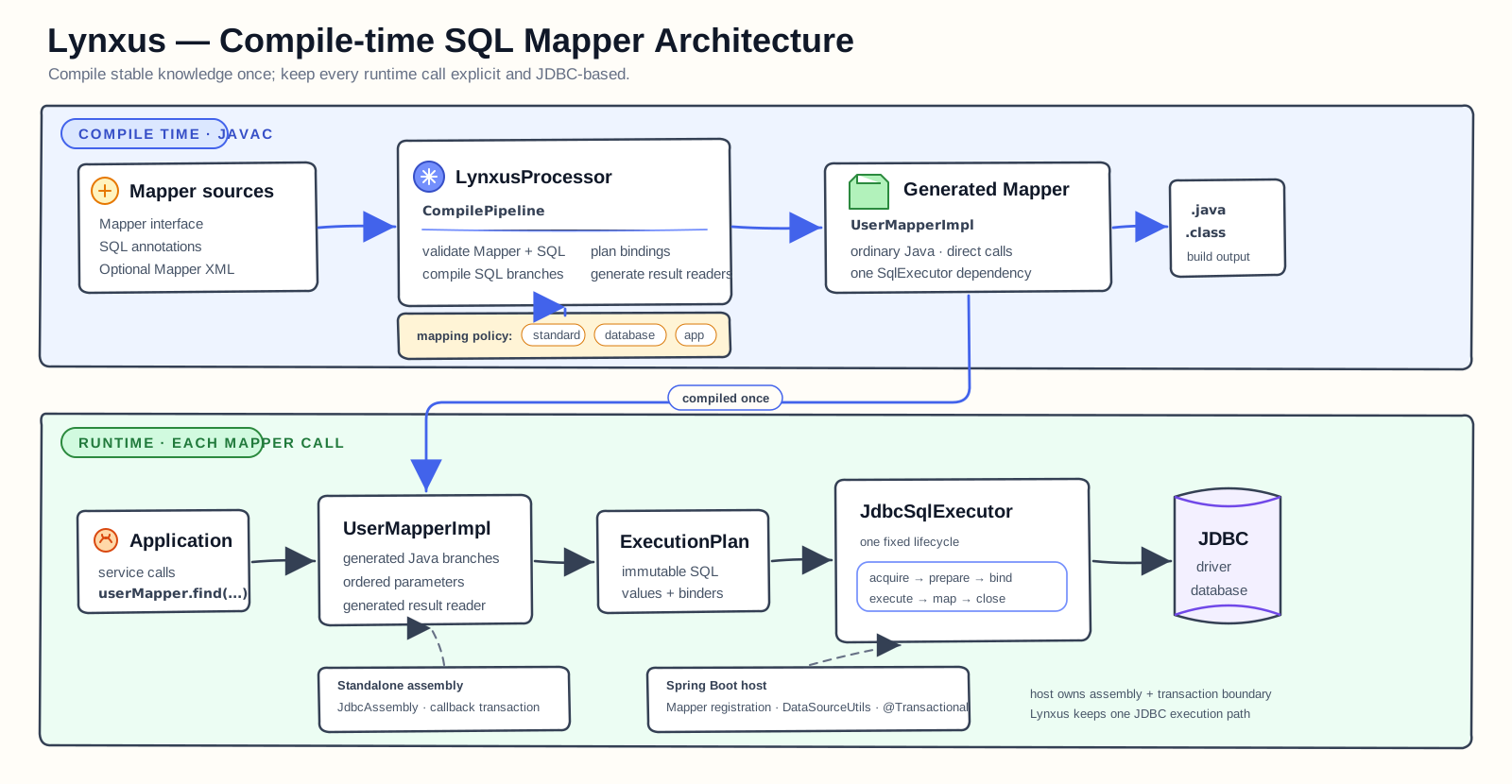
The editable source is stored beside the published image as lynxus-architecture.excalidraw.
Compilation
Section titled “Compilation”The lynxus-processor artifact validates Mapper methods, selects SQL sources, compiles supported
dynamic SQL, plans parameters and result mapping, and generates ordinary Java implementations.
lynxus-core is the runtime artifact consumed by generated source. Generated dynamic methods keep
native Java branches and loops visible while using one BoundSqlBuilder to own SQL spacing, clause
normalization, and aligned placeholder routing. The builder is a generated-code/runtime seam rather
than an application query DSL. Invalid signatures, unsupported expressions, ambiguous mappings, and
malformed XML fail during compilation whenever javac can identify the location.
Runtime
Section titled “Runtime”Generated Mappers retain immutable statement definitions and bind only each invocation’s SQL parameter values into execution plans before calling SqlExecutor. Fixed SQL, statement identity, options, JDBC routing, and result assembly live in generated QueryDefinition, CommandDefinition, or BatchDefinition fields instead of being rebuilt on every call. Standard SELECT methods use a typed QueryExecutionPlan<T> whose generated result assembler performs direct object construction and setter calls after Core JDBC value conversion. JdbcSqlExecutor owns statement preparation, parameter binding, execution, result reading and assembly, cleanup, and final observation. Runtime code does not load Mapper XML, evaluate OGNL, dispatch through Mapper proxies, or discover handlers.
This generated-code boundary is also the basis for Lynxus’s AOT-first position. The standalone path is verified with an ARM64 Native Image smoke build; see AOT usage.
Host Integrations
Section titled “Host Integrations”Standalone and Spring applications use the same generated Mapper and JdbcSqlExecutor path. They differ only in assembly, connection participation, transaction ownership, and Mapper instance registration.
- Standalone JDBC uses
JdbcAssemblyand callback transactions. - Spring Boot owns IoC, named DataSource binding, and transaction boundaries.
One Mapper belongs to one DataSource domain. Applications with several DataSources use disjoint Mapper packages and independent executor graphs.
Compile, startup, and invoke
Section titled “Compile, startup, and invoke”The compile-time mapper index is the set of processor-emitted mapper metadata resources the starter loads at startup. Lynxus uses it to register generated Mappers without scanning *MapperImpl classes.
| Phase | MyBatis | Lynxus |
|---|---|---|
| Compile | Mapper interfaces and XML are packaged almost as written | javac validates SQL, parameters, dynamic SQL, and result mappings; generates ordinary MapperImpl; writes the compile-time mapper index |
| Startup | Parses XML, builds MappedStatements, creates JDK proxies, scans Mappers |
Loads the compile-time mapper index and registers already-generated classes. Does not parse XML, create proxies, or scan *MapperImpl. Spring Boot 4.1.1 is verified |
| Invoke | SqlSession.getMapper proxy → dynamic SQL / OGNL → JDBC |
Ordinary Java method → already-built plan → SqlExecutor → JDBC. No runtime XML, no OGNL |
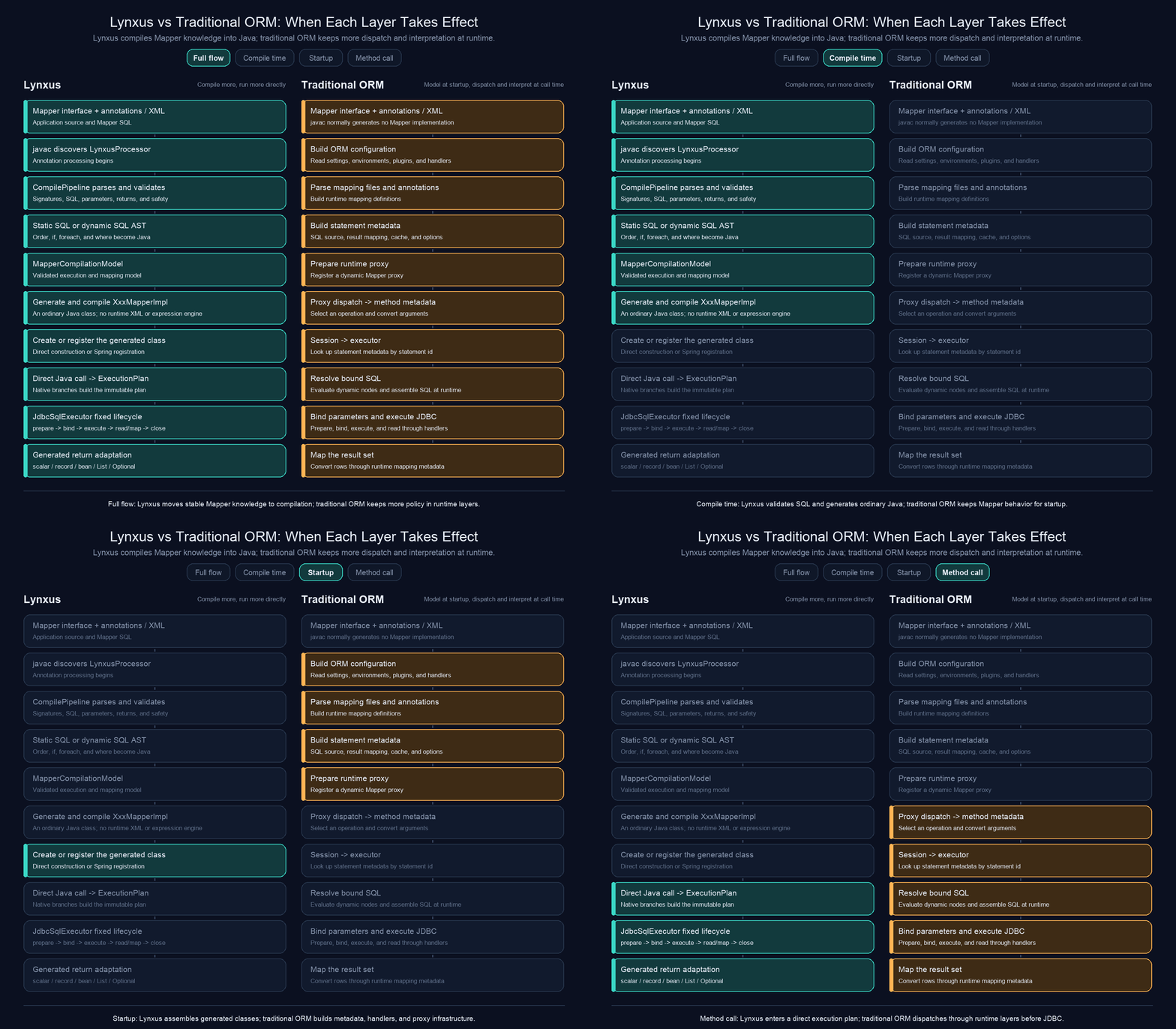
The durable architectural principles and non-goals are defined in Design Philosophy. Normative behavior is defined in the Core contract.